
In Search of Lost Roses Reviews Plus “Old” Roses For Sale
In Search of Lost Roses Reviews Plus “Old” Roses For Sale
In Search of Lost Roses
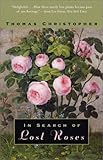
Once upon a time—before the 1860s—people loved old roses like “Pearl of Gold,” “Marchionesse of Lorne,” or “Autumn Damask.” Then along came the hybrid tea roses, which were easier to arrange, more dramatic, and longer-blooming, and the old roses were all but forgotten. Now the lovely, subtle-hued, richly perfumed old roses are making a comeback, thanks to the efforts of a stubborn band of eccentric characters who rescued them from back alleys, ramshackle cottages, and overgrown graveyards ac

List Price: $ 17.50
Price: [wpramaprice asin=”0226105962″]
Old Roses For Sale
[phpbay]antique rose, 18, “159912”, “”[/phpbay]
In Search of Lost Roses Reviews Plus “Old” Roses For Sale related articles from the blogosphere…
Comparison of Modern Roses to Old Roses
Some varieties of old roses date back to ancient times. These flowering bushes tend to be very hardy, disease and pest resistant, and have strong beautiful fragrances. The major drawback to old rose varieties is that most bloom only …
Publish Date: 06/08/2011 12:12
http://www.livelywaters.com/posts/comparison-of-modern-roses-to-old-roses
Day 14 – National Rose Month | The Redneck Rosarian
I love old roses. They are resilient, fragrant, put on a big show in the garden and are generally pleasing overall. I am not a big fan of purple and lavender roses. This rose however, has captured my heart. …
Publish Date: 06/14/2011 5:16
http://redneckrosarian.wordpress.com/2011/06/14/day-14-national-rose-month/
Wayside Treasures: Old fashioned roses
Hi Sandi… yes, I can smell your Heavenly old~fashioned roses all the way from your home to mine… love the luscious color and you are right, they smell so wonderful, nothing else can compare… they look so pretty in …
Publish Date: 06/11/2011 5:24
http://waysidetreasures-sandi.blogspot.com/2011/06/old-fashioned-roses.html
Pruning Roses That Grow From The Base
This video explains how to prune bush shaped roses that grow their new canes from the base of the plant every year. There are three accompanying videos that examine other ways to prune bush shaped roses. “Introduction To Rose Pruning”. “Pruning Bush …
More Roses Products
Few gardening books like this one,
For me, Gardening is about feeding my soul with beauty. If you are weary from reading the countless “how-to” gardening books that fill the shelves of the bookstore, then I would highly recommend this book.
Did you know that public parks evolved historically from cemeteries? Read this book to find out more.
And, no doubt, as other reviewers have noted, you will go out and find yourself one of these roses after reading their story.
Great book! 🙂
Was this review helpful to you?

|~a life-long collector of garden writing says…~,
There are few books in my gardening library so excellent I buy extra copies; miserly dealt out only to The Worthy. One of them is In Search Of Lost Roses.
In Search Of Lost Roses is a romp. A detective story. We are outlaws. We skulk through forgotten cemeteries. We drive old dirt roads. We meet eccentric old folks over garden gates, guardian angels of roses whose scent we will remember all our lives; things foreign to hybridizers in white lab coats.
I defy you to read this book and ~not~ acquire at least one of the old roses lauded within. My first choice was ‘Aimee Vibert’, a climbing noisette from 1828. England and France have an ancient horticultural feud. French nurseryman J.P. Vibert named his fragrant white masterpiece after his daughter. (As an aside: hunt plants with a woman’s name. Only the best plants were named after wives, daughters, and mistresses.) Vibert said of his delicate climber “The English when they see her will go down on their knees.” As I did and still do. For the three weeks she blooms on the arbor she is the goddess of the garden. She has a magnetizing effect on garden visitors and I tell them the story and say the punchline in my Inspector Clouseau accent. It is a testament to Mlle. Vibert that 200 years later she is still enchanting, passed down gardener to gardener. I never would have known her without In Search Of Lost Roses.
You will never forget this book. But buy it for the rose rustler’s cutting recipe alone, if you will. With it I rooted cuttings from a fragrant and summer-long unknown in an ancient cemetery (I gave her the name of the lady she was planted over) after two years of trying other methods. And buy two. Perhaps someone you know is worthy. 5 Stars for Mr. Christopher.
Was this review helpful to you?

|A delight for rose lovers, and a fun read for anyone,
My family has a long-standing love affair with roses: a “Belle of Portugal” that my grandmother planted in the 1920’s has been passed down through several generations. So I found this book utterly delightful, full of fascinating anecdotes about old varieties of roses, the characters who developed and distributed them, and the even wilder characters who “rustle” and propagate old roses with passion and gusto today. The chapters are thematic and geographical, rather than historical, but they’re immensely fun to read. I learned all sorts of amazing historical trivia — e.g., why the Grass Valley, CA public library owns a Cornish/English dictionary, and the political aspects of rose nomenclature. And, as someone interested in “heirloom” plants in general (I’m a card-carrying member of Slow Food), I found his discussion of rose genetics and propagation fascinating. Some of his stories are poignant, too — e.g., the elderly black women in rural Texas who propagated roses over the centuries from sheer love, but were dying out even as he wrote. I enjoyed the book thoroughly, and recommend it even if you’re not an old rose buff.
Was this review helpful to you?

|