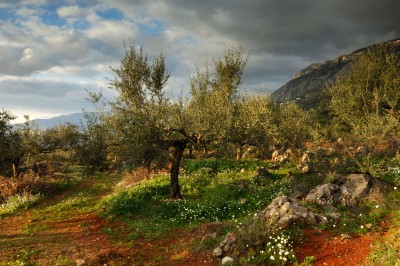
The 30-Meter Mind Effect: How Tiny Forests Heal the Urban Brain
Do you have empty spaces in your neighborhood, like vacant lots? Planting a tiny forest in such empty areas is an easy upgrade to the local quality of life…
People think that mental balance restoration requires escape — a weekend in nature, a mountain cabin, or a digital detox far from the city. But neuroscientists are telling a different story: “You don’t need wilderness trip to restore your brain!” You just need a pocket forest – a 30 meters (a hundred feet) sized patch of native trees nearby to bring the healing properties of a National Forest trip.
The Science Behind a Small Forest
Researchers studying “forest bathing” in Japan found that even limited exposure to natural green spaces triggers measurable biological repair.
Cortisol levels drop.
Parasympathetic activity rises.
And within minutes, the immune system activates its natural killer cells — the same cells responsible for fighting stress-related inflammation and early disease markers. This isn’t about mood. It’s about a neural calibration of of you brain.
The human brain evolved in response to natural sensory input: fractal patterns in leaves, humidity variations, the sound of rustling foliage, the sound of animals and insets… Urban environments strip those cues away, leaving our nervous systems in a constant state of low-grade alarm.
*What Happens When You Step into a Pocket Forest
Step into a micro-forest — a 30-meter patch of native trees — and your body begins re-calibrating.
The prefrontal cortex, responsible for focus and self-control, restores its rhythm.
Amygdala activity — the stress signal center — decreases.
Dopamine sensitivity, dulled by digital overstimulation, rebalances naturally.
The effect is so strong that neuroscientists can track it within minutes of exposure. Thirty meters of green can do more for emotional regulation than hours of scrolling or a full day of rest indoors.
H3>The Urban Nervous System>/h3>
Cities are built for commerce, not calm. Yet the future of urban design is shifting toward “neuro-friendly infrastructure” — integrating green corridors, rooftop forests, and native micro-groves into concrete landscapes.
Urban planners are beginning to realize what neuroscientists already know:
A single 30-meter stand of native trees can lower collective stress levels in a neighborhood. Acting as a biological refuge — mini-forests are not just for pollinators, soil microbes, native trees and plants, animals and birds, but for people, too.
Why Native Trees Matter?
Imported ornamental plants can’t replicate the same neuro-biological effects.
Native trees emit familiar chemical compounds (phytoncides) that humans have evolved alongside for millennia. Those compounds lower blood pressure and synchronize circadian rhythms, creating a sense of *homeostasis* that foreign species can’t mimic.
This is why the “pocket forest” movement emphasizes the “local ecology”. Each biome carries its own language — one your nervous system still remembers, even if your mind has forgotten. When everything growing within a nearby small forests is local, neighborhood interconnect and the community flourishes.
Re-framing Urban Well-being
The greatest shift isn’t scientific — it’s philosophical – what should our cities provide, what should they look like? Healing no longer requires retreat. It requires design. Improved mental and physical health can be engineered directly into city life when we treat nature not as decoration, but as “neural infrastructure”.
A 30-meter forest on every block isn’t fantasy. It’s medicine — scalable, measurable, and urgently needed. Every gardener knows instinctively the joy plants bring to their lives. Why not bring the forest back to all city dwellers into tiny increments?
Soft Call to Action
If you’re an urban planner, designer, or policymaker, or just active around your block, start small. Map the forgotten corners, the unused plots, the in-between spaces — and turn them into micro-forests of native trees. Because the next frontier of mental health and physical well-being won’t come from apps or pills. It will grow from the ground beneath your feet.
News About Pocket Forests
One Day It Comes Together
Funny how change pacing so slow,
doesn’t seem to have happened
until one morning
everything is different…
As I look down 5th Avenue
and see dots of green
appearing on every block
until my view fades out
on the horizon.
Pocket forests of native wildness
once just a suggestion written down
then spoken at a meeting,
have become as natural to the city
as coffee shops and just as vital
in the urban landscape.
©2025 Carl Scott Harker, author of
Mastectomy Poems